Can a Blue Chinese Wisteria Tree Cause a Skin Rash?
You roll up a sleeve after a long winter pruning session and see a faint red streak on your forearm. Before anyone offers an answer, ask a simple question: what exactly is that mark? It could be a scratch from a stiff cut stub, an irritation from sap, a true allergy, or a reaction to something else that was growing through the vine.
Many people assume wisteria is either harmless to touch or a plant that rashes everyone who goes near it. What we see sits between those two beliefs. Most marks trace back to the pruning routine itself, and each one has a cause you can work out.
We'll walk you through the key terms, then each symptom you might notice, from itchy skin to watery eyes, then the cause behind them, how to dress for the next session, and when to call a clinician.
What Skin Contact Means With a Blue Chinese Wisteria Tree
Words like "irritation" and "allergy" get used loosely, and they mean different things. A few definitions will make every symptom below easier to read.
Four Terms to Know
These four terms underpin every symptom described in the sections that follow.
- Contact irritation is direct damage to the skin from a substance or from rubbing. It can happen to anyone with enough exposure, and it usually shows up soon after contact.
- Allergic reaction is the immune system responding to a substance it has learned to flag. It affects only some people and often appears a day or more after contact.
- Sap is the plant juice that wells up at a fresh cut. On wisteria it coats your blades, gloves and sleeves.
- Sensitization is the quiet first step toward an allergy. Skin meets a substance, the immune system takes note, and nothing visible happens until a later exposure.
How Irritation and Allergy Differ
Think of irritation as a sunburn: enough exposure and nearly anyone reacts. An allergy is more like a doorbell that has learned one visitor's face. Most people never hear it ring, and those who do may not hear it the first time.
That difference matters for what you do next. Irritation tends to fade once the contact stops. An allergy can flare harder with each new exposure.
NC State's Plant Toolbox does not flag Chinese wisteria as causing contact dermatitis. That is reassuring, but it is not a promise. A scratch, a sap smear or a neighboring plant can still leave a mark on your skin.
Redness and Itching After Pruning a Blue Chinese Wisteria Tree
The first symptom to look for is mild redness and itching that shows up while you work or soon after you finish. It usually points to the cut stems, and the fix is simple.
Where It Comes From
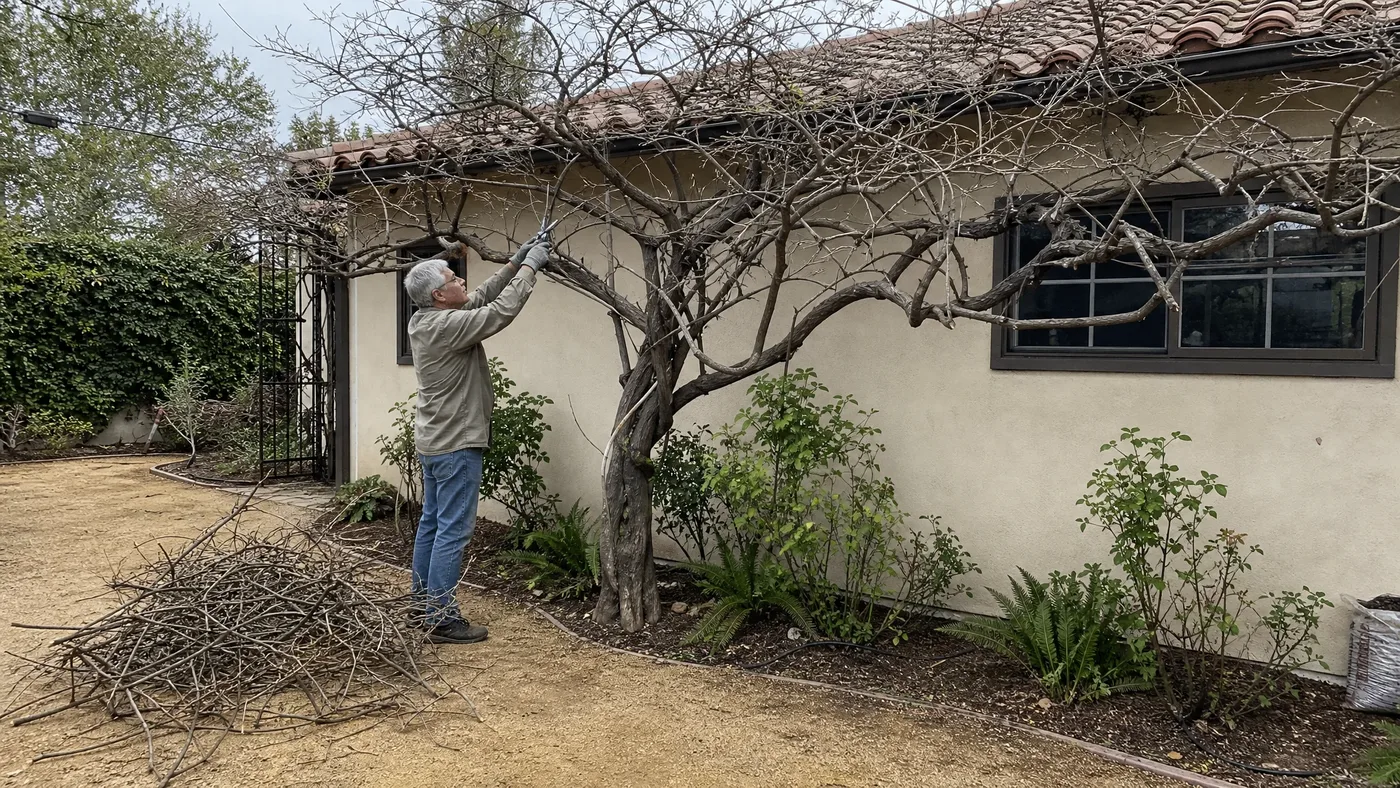
Winter pruning on this plant means many cuts. Oregon State Extension says to shorten runners to two or three buds, about 6 inches, so you handle a lot of stiff, cut stubs. Each stub can scratch your wrists and forearms, and each cut can leave sap on your sleeves and gloves.
A streak or a patch of tiny bumps along the forearm, right where the stubs brush your skin, is the classic pattern. Redness in a line that follows where a stem dragged is mechanical irritation first and sap exposure second.
What to Do Right Away
Follow these steps in order, and do them the same day.
- Stop pruning and take off gloves and any sleeve that touched cut stems.
- Rinse the area with cool running water and mild soap. Rub gently, because hard scrubbing makes irritation worse.
- Pat dry, then lay a cool, damp cloth on the spot for a few minutes.
- Look closely for tiny splinters or thorn-like stubs and remove them with clean tweezers.
- Leave it alone. Scratching turns a mild mark into a broken-skin problem.
Customers usually ask us whether a streak like this means they should stop pruning. If it fades the same day, you can carry on with better sleeves. Before you blame the vine, check what else was woven through it. Poison ivy and other plants can climb a wisteria, and a rash from them looks just like this.
Blisters or Weeping Patches a Day Later
A different pattern appears the next morning or the day after: swelling, small blisters, or a patch that oozes. This is a slower reaction, and it needs gentler handling than a simple red streak.
Why It Arrives Late
Delayed reactions are the typical timing for a contact allergy. The immune response takes time to build, so the skin looks fine at the end of pruning and angry a day later. Because of that gap, people often blame the wrong thing, such as laundry soap or a new lotion.
Work backward. Ask what touched that exact patch during the session. If blisters sit where a sleeve gapped or a glove cuff ended, sap or plant material is the likely suspect. The sources we rely on do not tie these blisters to Chinese wisteria in particular, so treat the pattern as a clue and not a verdict.
A Gentler Treatment Plan
Blistered skin is open to infection and easily damaged. Go slowly with it.
- Wash once with cool water and mild soap, then pat dry without rubbing.
- Do not pop blisters or peel loose skin. The roof of a blister protects the skin underneath.
- Apply a cool, damp cloth for comfort, and wear loose, soft clothing over the area.
- Take a photo each day so you can see whether it is shrinking or spreading.
- Ask a pharmacist which over-the-counter products suit weeping skin, and follow the label.
Pause pruning until the skin has healed. If it is still blistering after a couple of days of careful care, see a clinician instead of waiting it out.
Itchy Eyes, Sneezing or Wheezing Near the Blooms
Eye, nose and chest complaints are a separate problem from skin marks. They involve the air around you, not what touched your arm, and they deserve their own thinking.
Eyes and Nose
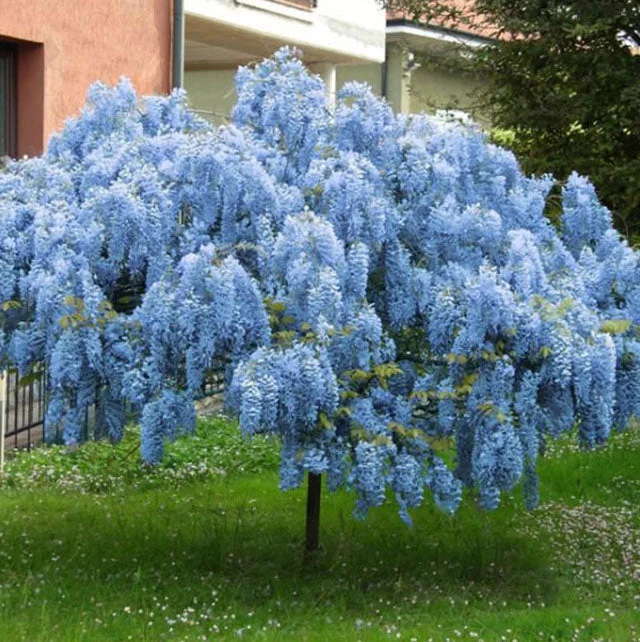
Itchy, watery eyes or sneezing around a wisteria in flower are easy to blame on the plant. Illinois Extension gives May as the bloom month, and the racemes run 6 to 12 inches long and are only mildly fragrant. But May is crowded with other pollen, and the sources we use do not say the flowers cause hay fever. We would not assume the plant is at fault without a pattern.
Test it plainly. Do the symptoms start only when you stand under the vine or when you cut and carry stems? Do they stop when you go indoors? If so, the plant or the dust you stir up from it is a reasonable suspect. Our bloom time guide lays out when the flowers open, so you can match symptoms to dates.
Dust From Pruning
Winter pruning brings dust and bits of dry bark into the air, and you work with your face close to the cuts. Summer pruning happens after flowering, when the stems are green and whippy, so there is less dust but more sap.
If your eyes or nose act up mid-session, walk away from the vine. Wash your hands before you touch your face, rinse your eyes with clean water, and do not rub them. NC State lists all parts of the plant, flowers and sap included, as poisonous with low severity, so keep sap-covered hands away from your eyes and mouth.
Wheezing or any trouble breathing is different. Treat it as a medical matter and read the doctor section below.
Why Sap From a Blue Chinese Wisteria Tree Bothers Skin
Now that you know what the symptoms look like, here is what likely sits behind them. The honest answer mixes what the sources say with what we can reason from the work.
What the Sources Say
NC State lists the toxic principle as lectin and wisterin glycoside, and names the sap or juice among the poisonous parts, along with the stems. Those entries concern poisoning. They do not tell us which compound, if any, bothers skin. We would rather say that than guess.
What we can say from the work is that pruning puts you in direct contact with fresh sap, stiff cut stubs and bark. Each of those can irritate on its own. Together they explain most red streaks along the forearm after a long session.
How Repeated Handling Adds Up
Here is the sensitization idea in practice. A first exposure might do nothing you can see. A later one, with sap on bare skin for longer, might trigger the doorbell. That is how contact allergies work in general, not a finding specific to this plant.
This is why twice-yearly pruning matters. Prune in July or August and again in January or February, and note that regular pruning is needed to control rampant growth. You will handle this plant for many years. The goal is to keep every session a low-exposure one.
Dressing for Pruning a Blue Chinese Wisteria Tree
Prevention is cheaper than treatment, and it fits easily into the routine you already follow. Wear gloves and other protective equipment when handling Chinese wisteria.
Pruning-Day Checklist
Run through these before you pick up the shears.
- Wear long sleeves with snug cuffs, and tuck or tape the gap where glove meets sleeve.
- Wear gloves that cover the wrists, and replace any pair that has soaked through with sap.
- Put on safety glasses, especially for overhead cuts on a tall vine. Our size guide shows how far it climbs.
- Wipe sap from blades and handles as you go, so you are not carrying it on your tools.
- Keep your hands away from your face until you have washed.
Match the layers to the season. The summer cut-back of green shoots is the sappier job, so favor gloves you can rinse or discard. The winter job is stiffer and scratchier, so favor thicker sleeves that stubs cannot drag through.
Cleaning Up Afterward
The session is not over when the last cut is made. In our rows, we keep a bucket of soapy water at the end of each pass, and we recommend you do the same for your tools and hands.
Wash your hands and forearms with soap and cool water right away. Take off your gloves and sleeves, and launder them separately from the family wash. Clean your blades before you store them. Sap left on handles is how people get a rash the following winter without any new exposure.
Ingestion is a separate issue from touch, especially if you have children or pets in the yard. Our guide on whether this plant is toxic to pets and kids covers that. Our pruning guide covers where to cut.
When a Blue Chinese Wisteria Tree Rash Needs a Doctor
Most marks are mild and fade with washing and time. Some are not, and it is better to call early than to wait and hope.
Stop Self-Care and Call a Clinician If
Any one of these is enough to make the call.
- The rash is spreading beyond where you touched, or keeps growing after a couple of days of careful care.
- It involves your face, eyes, lips, mouth or genitals.
- You have a fever, or the area becomes hot, very painful or starts to drain pus.
- Blisters are large, widespread or not improving.
- You feel swelling in the face or throat, or have wheezing or trouble breathing.
For breathing trouble, swelling of the face or throat, or any case where someone may have eaten part of the plant, call your local emergency number. For everything else, a call to your doctor or a local pharmacist is a sensible first step. Tell them you handled Chinese wisteria and what else was in the vine.
Match the Rash to the Cause at Your Next Pruning
Here is the whole guide in a few lines. Redness and itching soon after pruning usually mean irritation from cut stems or sap, and cool water and soap are the fix. Blisters or oozing a day later point to a delayed reaction, so go gently and watch for spread. Eye, nose or chest symptoms are about the air, not the skin, and breathing trouble is always a medical matter.
Blue Chinese Wisteria Tree
Nursery-grown Blue Chinese Wisteria Tree in sizes from Quart, shipped to your door.
From $49.49
Shop Now →So wash up after your next pruning, watch your skin for a day, and let what it shows decide how you dress next time. We are growers with our own farms, and we raise and sell top-quality trees. Every Blue Chinese we ship leaves us with its roots snug in fresh mix and its canes tied and cushioned for the trip, so the plant that reaches your door can go straight into the ground, ready for the pruning routine you now know how to handle.