Blue Chinese Wisteria Tree
Wisteria sinensis
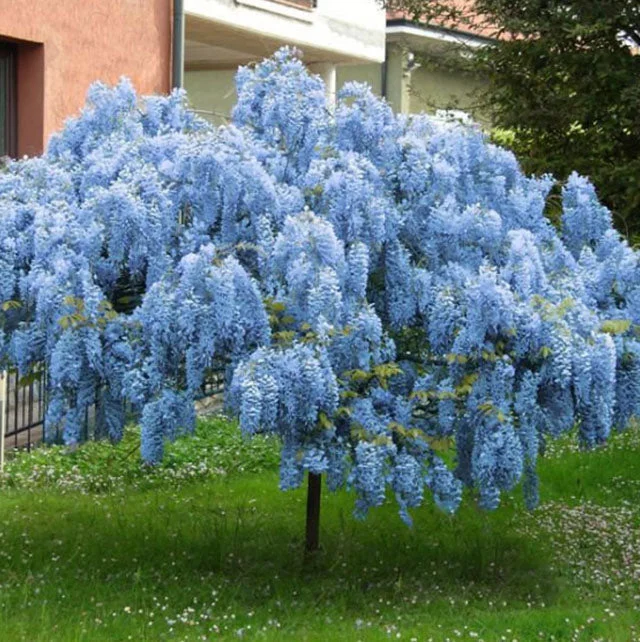
Trained Blue Chinese Wisteria Tree, ready to plant
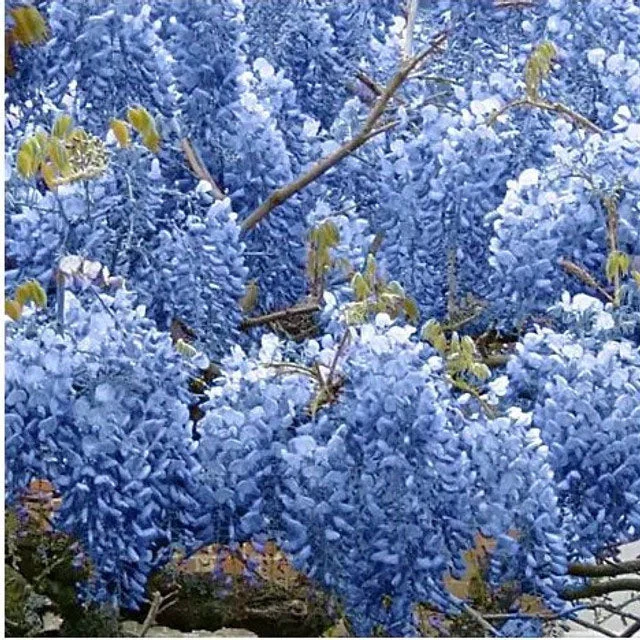
- Trained tree form with cascading blue-violet spring blooms
- Fast growing, reaches 6-10 feet tall with 10-15 foot canopy spread
- Hardy zones 5-9, deer resistant, adaptable to most soils
About this plant
A Blue Chinese Wisteria trained as a flowering tree, not a rambling vine. This deciduous standard form reaches 6-10 feet tall with a 10-15 foot canopy spread. In spring, cascading blue-violet flowers bloom before the leaves emerge, creating a dramatic focal point in gardens or near entryways year after year.
Your wisteria arrives nursery-grown in a container, ready to plant directly into the ground or a large pot. Upon arrival, water thoroughly if soil is dry. Plant within a week in a location with full sun and well-drained soil. Provide consistent moisture during the first 1-2 years as it establishes its root system.
Blue Chinese Wisteria Tree at a glance
| Botanical name | Wisteria sinensis |
|---|---|
| Plant type | deciduous flowering vine trained into a tree/standard form |
| USDA zones | 5-9 |
| Mature height | as a trained standard: 6-10 ft trunk/canopy typical for landscape tree form; if left untrained as a climbing vine can reach 25-30+ ft |
| Mature width | 10-15 ft canopy spread when maintained as a tree form; can sprawl much wider if grown as an unpruned vine |
| Sun | full sun (minimum 6 hours direct sun) for best bloom; tolerates light shade but flowers less |
| Water | regular, even moisture while establishing (first 1-2 years); moderately drought tolerant once established |
| Bloom time | spring, typically April-May, flowering just before or as leaves emerge |
| Bloom color | blue-violet (this 'Blue' Chinese wisteria selection); species also occurs in white and deeper purple forms |
| Growth rate | fast — vine growth of 3-5 ft or more per year before it is checked back by pruning to hold tree form |
| Deer resistance | generally good deer resistance |
| Best planting time | early spring or early fall |
Container sizes explained
| Quart / QT | A 4 inch pot, roughly one quart of soil. A young starter plant, the most economical way to buy several. |
|---|---|
| #1 / 1 Gallon | A trade one gallon pot (about 6.5 inches). One to two seasons older than a quart, with an established root system. |
| #2 / 2 Gallon | A trade two gallon pot. Common for peonies and perennials that need root room; usually blooms the first or second year. |
| #3 / 3 Gallon | A trade three gallon pot (about 10 inches). A well-developed shrub or small tree, often 2 to 4 feet tall on arrival. |
Questions before you buy
Which size should I choose?
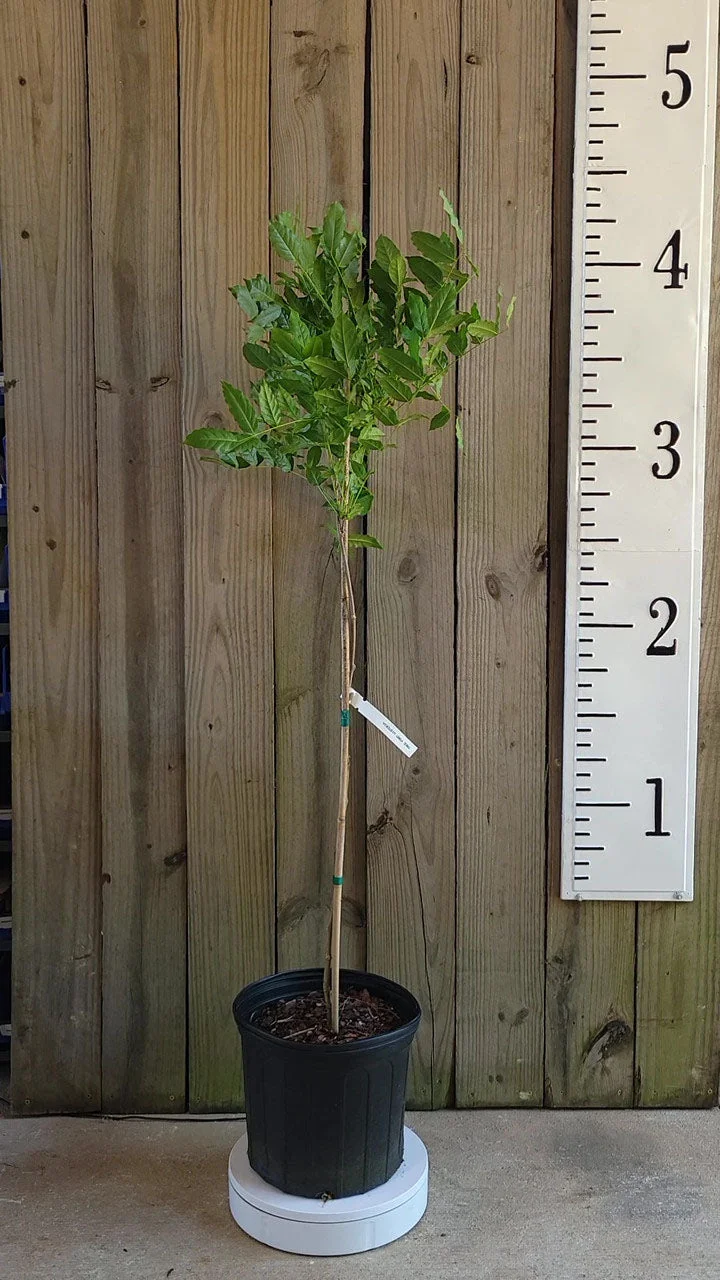
The Quart is a young plant that will take several years to reach tree form. The 1 Gallon (24-26" tall) is a good middle size. The 3 Gallon options (3-4' or 4-5' tall) arrive more established and more likely to flower within 1-2 years of planting, making them ideal if you want faster blooms.
When should I plant it after arrival?
Plant within a week of receiving your wisteria. Water it thoroughly upon arrival if the soil is dry. Choose a location with full sun and well-drained soil. If planting must be delayed, keep the container in a shaded location and water as needed to maintain even soil moisture.
How big does the tree form actually get?
As a trained tree standard, expect a mature height of 6-10 feet with a canopy spread of 10-15 feet. If you stop pruning and allow it to grow as an untrained vine, it can reach 25-30 feet or more, but the tree form requires regular pruning to maintain the single-trunk aesthetic.
How much sun does it need?
Blue Chinese Wisteria blooms best in full sun, meaning at least 6 hours of direct sunlight daily. While it tolerates light shade, flowering will be reduced in shadier locations. Aim for a placement where it receives morning sun.
What hardiness zones can I grow it in?
This wisteria is hardy in USDA zones 5-9, thriving across most of the continental U.S. except the coldest northern zones and the warmest southern regions. Check your local zone to confirm it will survive winter temperatures in your area.
What should I do in the first year after planting?
Water regularly to maintain even soil moisture during the first 1-2 years while the root system establishes. Mulch around the base to help retain soil moisture and suppress weeds. Avoid heavy pruning the first year; let it develop a strong root system. Once established, it becomes moderately drought tolerant.