Growing a Blue Chinese Wisteria Tree as a Bonsai
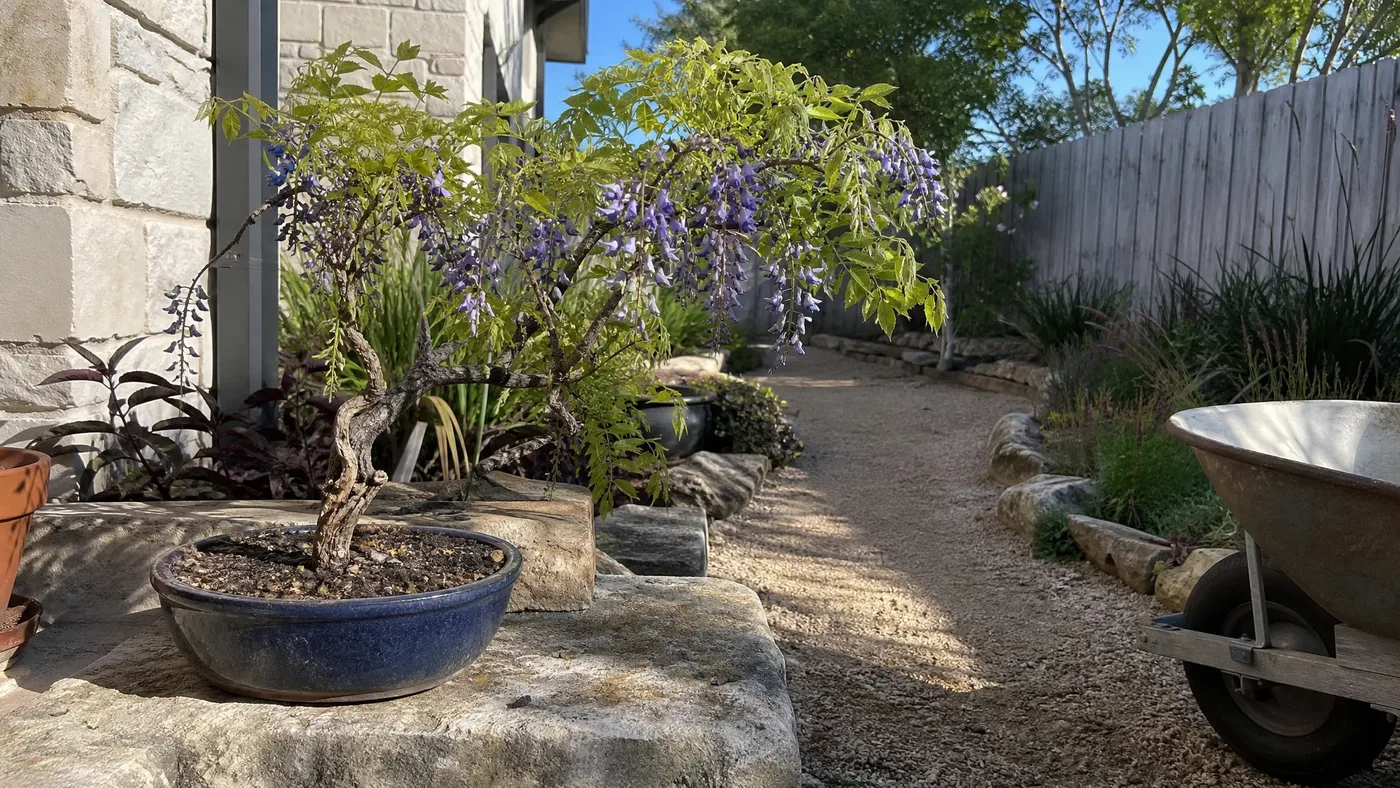
Picture a small tree on a table, low evening light slanting across a trunk no thicker than your thumb, a few blue-violet clusters hanging over the rim of the pot. The pot is the frame, and everything else is composition. The trouble is that wisteria does not want to be small. Left alone, the species is a rapid grower and an invasive weed, and a bonsai has to be kept lean on purpose.
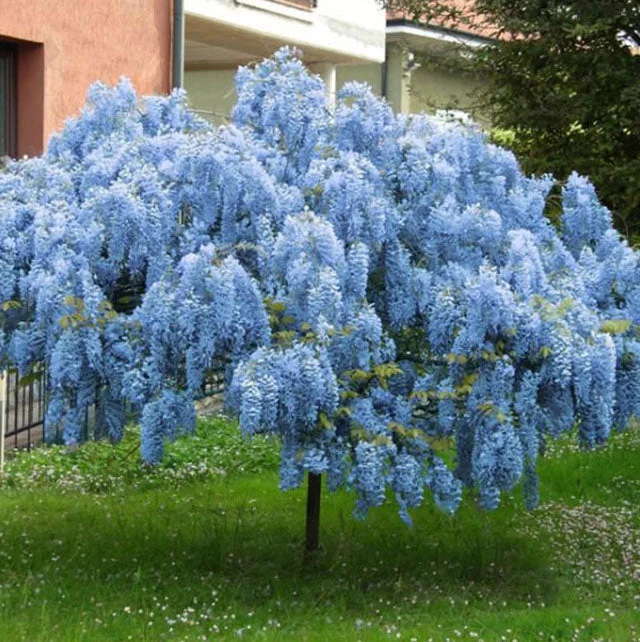
Done badly, you get a tangle of green shoots and no flowers. Done well, you get the whole spring show at tabletop scale.
Below, you'll find out all about growing a Blue Chinese Wisteria Tree as a bonsai, including where to set it for light, which pot and soil to use, how to wire without scarring, which cutters to buy, and how feeding, watering and the seasons fit together.
Light and Place for a Bonsai Blue Chinese Wisteria Tree
Light is the first material you work with, because it decides whether the tree makes flowers or only leaves. Set the tree where it gets the most sun you can give it.
Give It Full Sun
The plant wants full sun, meaning 6 or more hours of direct sunlight a day. A bonsai needs the same. Many bonsai guides advise shading small pots to protect them, and we don't follow that for wisteria. Shade gives you long, pale shoots and a bare tree in May.
One of the most common questions we get is whether a miniature can live in a bright room. Our answer is no. It belongs outdoors for the growing year, and indoors only as a guest.
If you want a deeper look at exposure, our guide to sun requirements for a Blue Chinese Wisteria Tree covers it for full-size plants.
Choose a Display Spot
The best place is a sturdy bench or table outdoors, in the open, with clear sky above and as much direct light as the day offers. Turn the pot a quarter turn now and then, so every side of the trunk gets its share and the canopy grows evenly instead of leaning toward the brightest side.
Think about what the light does to the tree, too. Low morning or evening sun passing through the compound leaves throws a soft, fine pattern on the table, and a plain wall behind the pot lets the branch lines read clearly.
Bring It Close for the Bloom
When the flowers open, carry the tree to a porch table or a spot near a window so you can enjoy it up close. The fragrance is mild, so you will notice it best at close range rather than across a yard. Take the tree back out when the bloom fades.
The species is hardy in zones 5a through 8b, but roots in a pot freeze harder than roots in the ground. In the colder part of that range, shelter the pot in winter, and ask your local extension service what protection suits your area.
The Shallow Pot That Holds a Blue Chinese Wisteria Tree
The pot limits the roots, and the roots limit the tree. That is the whole idea, so choose the container as carefully as you choose the plant.
Depth, Width and Color
Pick a pot whose depth is close to the thickness of the trunk and whose width reaches roughly to the spread of the branches. A deep pot holds more water and lets the tree run. A shallow one keeps growth tight and makes the trunk look older than it is.
Wisteria is a vine at heart, and a vine in a roomy pot will happily send out yards of shoot. The shallow pot is your first and quietest pruning tool.
For color, think of the flowers. Blue-violet clusters look best against an unglazed pot in a quiet earth tone or a deep, dark glaze. Bright or glossy pots compete with the blooms. Choose a pot with large drainage holes, and cover them with mesh so the mix stays in and the water goes out.
Match the Pot to the Trunk
A thin young trunk looks lost in a heavy, wide pot, and a thick old trunk looks top-heavy in a dainty one. A rectangle or oval suits a trunk that leans or sweeps. A round pot suits an upright, centered tree. Set the trunk slightly off center and the composition feels more natural.
When to Repot
Bonsai are best repotted and root pruned in spring, ideally before new growth resumes, with autumn suitable in mild and sheltered places. That is our default too. Lift the tree, comb out the outer roots, trim them back and return it to fresh mix.
Pruning the roots in the fall may lead to more abundant flowers the next spring. Fall root work suits mild climates only. In a cold climate, wait for spring.
A young plant from us arrives with a trunk that still bends easily, which is exactly what you want when you begin.
Soil Mix That Drains Like Gravel
In a shallow pot, there is very little soil to buffer mistakes. The mix has to let water through quickly and still hold enough to carry the tree through a warm day.
What Goes in the Mix
Build the mix mostly from coarse, gritty parts, such as fine bark, pumice or coarse sand, with a smaller share of loamy soil or compost to hold moisture. If you can squeeze it into a wet ball, it is too heavy. It should fall apart in your hand and look like fine gravel with a little darker soil among the pieces.
Sift out the dust. Fine particles settle at the bottom of a shallow pot and block the drainage holes, and then the pot behaves like a bowl.
Why Drainage Matters so Much
Illinois Extension describes the species as needing deep, moist, well drained soil. A bonsai pot cannot be deep, so you make up for it with excellent drainage and a steady watering habit. Moist and soggy are not the same thing, and a gritty mix keeps you on the right side of that line.
Grit also lets air reach the roots after each watering, which a fine-grained mix cannot do in a container this size.
What About pH?
You do not need to adjust it. The plant tolerates acid, neutral and alkaline soil, with neutral running from 6.0 to 8.0. Our guide to soil for a Blue Chinese Wisteria Tree covers planting in the ground, where the rules are looser.
Wire, Tape and Gentle Bending
Wire is how you draw the lines of the tree. Bonsai branches are coerced into arrangements by wire wrapped along each branch, then moved into place. With wisteria, patience matters more than strength.
Wrap With the Plant
The plant twines counterclockwise around its support. Wrap your wire the same way, so it follows the tree's own habit. Anchor the wire in the soil or on a heavier branch, and wind it at an even slant with even spacing, snug against the bark but never biting into it.
Where a bend is tight, slip a strip of soft tape or paper under the wire first. It cushions the bark and spreads the pressure.
Time It by Bark
Green, young shoots bend freely but are brittle at the joints, so move them slowly. Older bark is firmer and may crack, so wire it only in small steps. Test the bend a little at a time before you commit. If you hear a crackle, stop and back off.
Bend gently, a few degrees at a time, and hold each position for a moment. Then let go and see where the branch settles. The wire's job is to hold the line while the wood sets, not to force it.
Take It Off Early
Wisteria thickens quickly, and wire that fits in June can bite by August. We often see wire left on one season too long, with a spiral scar the tree carries for life. Check often, and unwind the wire with small cutters, never by pulling.
Shears and Concave Cutters for Shaping
Good cuts heal clean and keep the miniature in scale. You need only a few tools, and sharpness matters more than price.
The Tools and Their Jobs
This table sets out what each cutter does on a bonsai wisteria.
| Tool | Use on a Blue Chinese |
|---|---|
| Small pointed shears | Trimming long shoots and cutting spurs back to a few buds |
| Concave cutter | Removing a branch flush with the trunk so the wound heals hollow, not as a stub |
| Root shears | Trimming roots at repotting |
| Small wire cutters | Removing wire without tugging at the bark |
Wipe the blades between plants. All parts of the plant are poisonous, so wash your hands after pruning.
When to Cut
Wisteria is best pruned twice a year, in July or August and again in January or February. After flowering, cut the whippy green shoots back to five or six leaves. While the tree is dormant, cut those same shoots to two or three buds.
Avoid early and midsummer cuts, which disrupt flower formation for the following year. Our pruning guide for bigger blooms covers the full-size tree, and the same timing applies here at smaller scale.
Cut for Shape, Not Just Size
Before each cut, look at the silhouette from table height. Remove shoots that cross, point straight down into the pot or crowd the trunk. Leave the ones that give the branch line a gentle rise and fall. A bonsai wisteria should look like a tiny old tree, with space between the clusters of leaves and room for the flowers to hang.
Feeding and Watering a Blue Chinese Wisteria Tree in a Dish
A shallow dish holds so little soil that the tree depends on you for every drink and every meal. Get the rhythm right and the small root zone works in your favor.
Watering
Water when the top of the mix begins to dry, and soak until water runs out of the holes. Do not water on a calendar. In warm weather and during bloom, a small pot may need water every day. A pot that sits wet is as dangerous as one that dries out, and we find that is the usual way these trees are lost.
Our guide to watering a Blue Chinese Wisteria Tree explains the difference between young and established plants.
Feeding
Feed lightly. Too much nitrogen pushes leafy shoots at the expense of flowers, and a bonsai has no room for them. Use a low-nitrogen fertilizer at weak strength, starting after the flowers fade, and skip feeding right after repotting while the roots recover.
Stop feeding in late summer so growth can slow for winter. The fertilizing guide goes into the reasoning.
Reading the Leaves
The foliage tells you how you are doing. Dark green leaves and short, firm shoots mean the balance is right. Pale, stretched shoots point to too little light, and limp leaves in the afternoon point to a pot that dried out. Adjust water and feeding in small steps, because a small root zone swings fast in both directions.
Seasons That Shape the Miniature Blue Chinese Wisteria Tree
Put the tools together and the year has a steady rhythm of flowering, trimming and rest. Each part prepares the next.
Flowers at Table Height
Flowering is in spring, and Illinois Extension lists May. The species bears racemes of mildly fragrant blue-violet, pea-shaped flowers, 6 to 12 inches long, that open almost at once. On a bonsai the clusters are smaller, and that is part of the charm. Enjoy them close up, on your table in good light.
Trimming Once the Bloom Fades
After the flowers, cut the long shoots back to five or six leaves in July or August. The Virginia Tech dendrology factsheet gives the leaves of the full-size vine as compound, with 7 to 13 leaflets, each 2 to 4 inches long. On a lean miniature, they stay noticeably smaller. Keeping the shoots short is what encourages flower buds instead of green growth.
Rest Through the Cold
When the leaves drop, the tree sleeps. Cut the shoots you trimmed earlier to two or three buds, check the wire and look at the branch structure, which is easiest to see on a bare tree. Keep the mix from drying out completely, and leave the tree outside in the cold it needs. Then in spring, repot if it is due, and begin again.
Starting a Blue Chinese Wisteria Tree Small
Picture the finished tree once more: a small, dark pot on a table, a gnarled little trunk and a few blue-violet clusters in flower against a plain wall. Nothing else is needed. Start with one plant and one season of careful watering and trimming, and let the tree show you what it wants before you ask for more.
Blue Chinese Wisteria Tree
Nursery-grown Blue Chinese Wisteria Tree in sizes from Quart, shipped to your door.
From $49.49
Shop Now →Customers come back to us for this tree because it gives them the same blue-violet spring flowers in a pot as on a pergola, and as a small business with our own farms, we grow and sell each plant with that in mind.