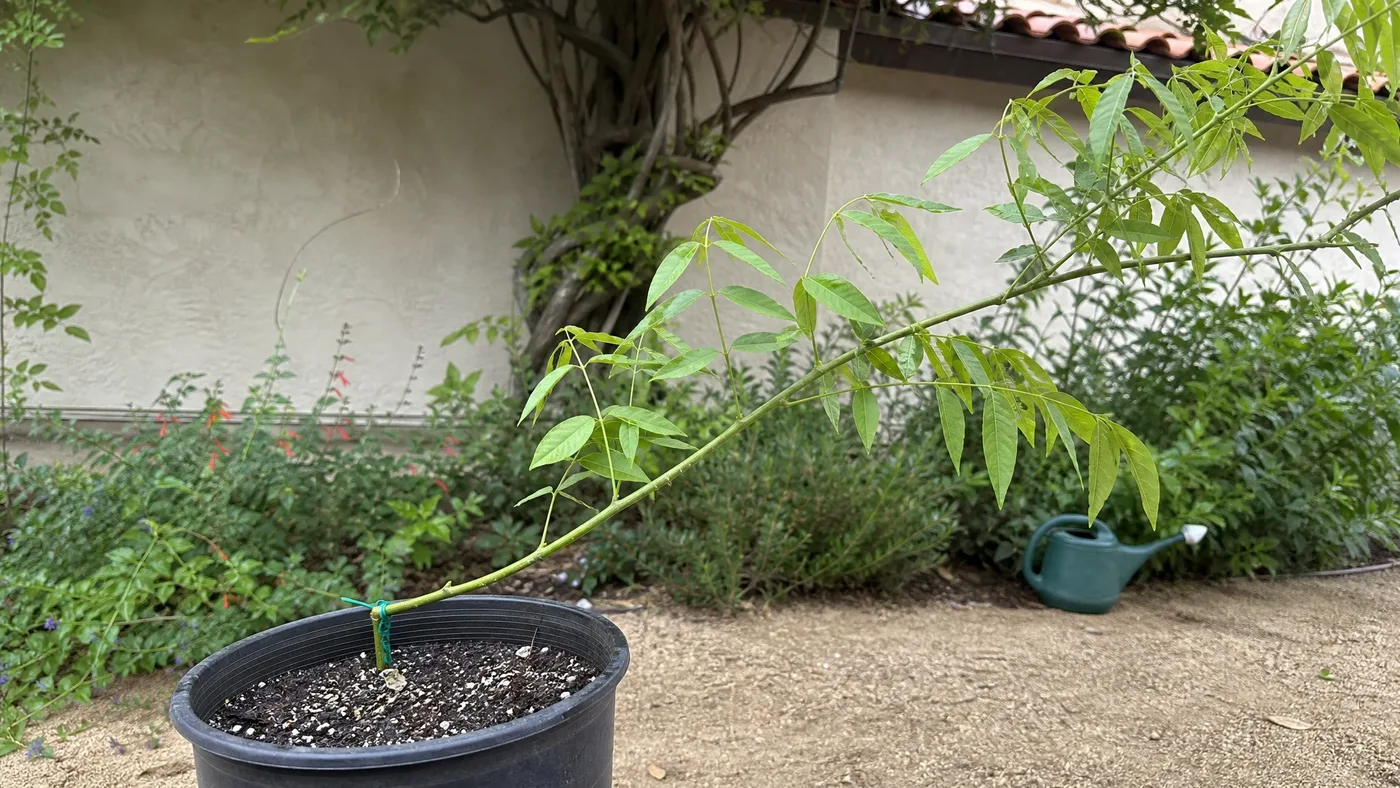
How to Propagate a Blue Chinese Wisteria Tree: Cuttings, Seed
A wisteria by a porch dropped a few fuzzy pods one winter, and its owner pushed the seeds into a flowerpot just to see what would happen. A few seasons later there was a healthy vine with leaves just like the parent's. It had no flowers at all. Meanwhile the parent kept putting out its blue-violet racemes every May, mildly fragrant, with bees working the blooms for days.
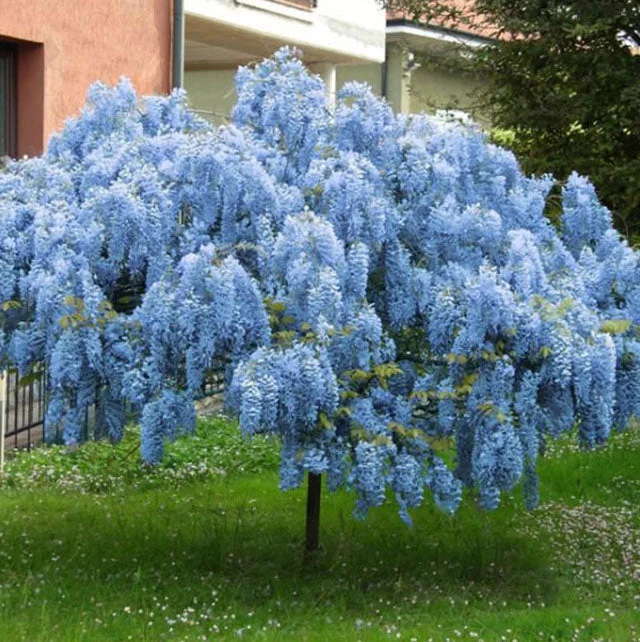
That story is why propagation advice for this plant needs a straight answer. Copy a stem and you get the plant you love. Sow a seed and you get a lottery ticket that may take years to pay out.
This article talks about layering, cuttings and seed, and answers the questions customers ask us most. Read on to learn which method keeps the blue, how to root each one, and how to sow and germinate seed if you want to try it anyway.
Pick the Method for Your Blue Chinese Wisteria Tree
Everything else in this job depends on one choice, and you make it before you touch a pruner. Here is how the options differ and what to check on the parent plant first.
Three Routes, Three Different Plants
The table sets the methods side by side. The short version is that layering and cuttings hand you the parent back, and seed does not.
| Method | Timing | Same as the parent? | Our view |
|---|---|---|---|
| Layering | Summer, on a stem still attached to the plant | Yes | The easiest to get right |
| Softwood cuttings | Spring to mid-summer | Yes | Works, but needs watching |
| Hardwood cuttings | Winter, on dormant wood | Yes | Slow and low effort |
| Seed | Sow fresh seed after pods ripen in fall | Not reliably | A gamble on color and bloom |
Chinese wisteria is propagated by grafting, layering or stem cutting. Grafting is how nurseries make named cultivars, which are almost always grafted while species are not. It is a skilled job, so we skip it here and stay with the three methods a home gardener can manage.
Seed comes last for a reason. A seedling will not reliably match the blue you are standing under, and it will not follow the bloom timeline in our buying guide for sizes and what to look for, which is written for grafted stock.
Find the Graft Before You Cut
If your plant came from a nursery, it is probably grafted, and that changes where you take material from.
Look low on the trunk for a swollen, slightly kinked union where one stem meets another. Everything above that line is the Blue Chinese. Anything sprouting from below it is rootstock, and a cutting or layer made from rootstock will not give you the plant you wanted. Tie a ribbon above the union so you can find it again in summer when the vine is a tangle, and take every stem from well above it.
Choose a Healthy Parent
Propagate from the strongest, cleanest vine you have. A stressed or diseased parent gives you stressed, diseased copies, and rooting is hard enough on a healthy one. If your plant has not settled in yet, wait a season. Pulling stems off a young wisteria that is still building its framework costs you more than the copy is worth.
Clean your pruners before every cut and wipe them between plants. It takes thirty seconds, and it is the cheapest insurance in this whole job.
Layer a Stem in Summer
Layering is the method we point most customers to. The stem keeps drawing water from the parent while it grows its own roots, which removes the stage where cuttings usually die.
Choose and Wound the Stem
This first step takes about ten minutes. Pick a flexible shoot of this season's growth, low on the plant and long enough to reach the ground with its tip still free. Wisteria stems are wiry and twining, so do not saw at them.
Strip the leaves from the section that will be buried, then scrape or nick the bark on the underside, where it will touch the soil. Sink a deep pot beside the parent, filled with a well-drained mix. Illinois Extension notes the plant wants deep, moist, well-drained soil, and a pot sunk to its rim gives the new roots exactly that.
Pin It Down and Keep It Moist
Lay the wounded section in the pot and pin it with a bent wire or weigh it with a stone. Tie the free tip upright to a short stake so it keeps growing toward light.
Water is where layers fail. A pot sunk in the open dries out faster than the surrounding ground, especially in a hot dry spell. Keep the mix moist, never soggy, and check it often. Most layering failures we hear about are a pot that was left to bake for a week in midsummer.
Sever Slowly and Move Once
Once planted, wisteria does not take well to transplanting. That is the reason to root the layer in a pot and not in the open ground.
When new top growth shows and the layer resists a gentle tug, cut it free of the parent. Do not rush it, and leave it in its pot for a full season more to build a root ball. Then plant it once, in its final spot, following our guide to planting a Blue Chinese Wisteria Tree the right way. Moving it again later undoes the work you just did.
Root Cuttings From a Blue Chinese Wisteria Tree
Cuttings give you more plants from less wood than layering does, but they ask for more attention. There are two windows, softwood from spring to mid-summer and hardwood in winter.
Softwood Cuttings in the Growing Season
Take the tips of this year's soft, bendy growth, well above the graft union. Cut just below a leaf node and strip the lower leaves. The leaves are pinnately compound, with 7 to 13 leaflets each 2 to 4 inches long, which is a lot of surface for a stem with no roots to feed it. Cut most of the leaflets off.
Push the cutting into a gritty, free-draining mix and cover the pot with clear plastic held off the leaves. Keep it in bright shade, away from midday sun, and open the cover daily for air. A wilted cutting in a hot, shut-up greenhouse is the usual funeral.
Hardwood Cuttings in Winter
Hardwood is the lazy option, and plenty of people prefer it. Use firm, dormant wood from last season, with several buds on each piece. Make the bottom cut just below a bud and the top cut above one, so you always know which end goes down.
Stand the pieces in pots of gritty mix in a cold frame or an unheated shed, with just the top bud above the surface. Then leave them mostly alone, only making sure the mix never dries out. They come into leaf in spring, and that new growth is your first hint, though not proof, that roots are forming.
Tell When a Cutting Has Rooted
Leaf growth alone fools people. A cutting can leaf out on stored energy and then collapse. Wait until you feel resistance when you tug lightly, or see roots at the drainage holes.
In our rows, the cuttings that fail almost always died of drying out, not cold. Pot rooted cuttings into deep containers and give them a full season before planting out. If you plan to keep one in a pot, our guide to growing a Blue Chinese Wisteria Tree in a container covers the long term.
Sow Blue Chinese Wisteria Tree Seed
Seed is the cheapest route and the least predictable. If you want to try it, do it properly, and go in knowing what the result will probably look like.
Collect and Ripen the Pods
Collect the seedpods after leaf fall and let them ripen in an open tray. Pods split and fling seed as they dry, so use a tray with sides.
Handle them with some care. The toxic principle is lectin and wisterin glycoside, found in the seeds and every other part of the plant, with low severity. Keep seed away from children and pets, and see our guide on whether the plant is toxic to pets and kids.
Soak, Sow and Germinate
Fresh seed goes straight in. If the seed has dried out, soak it for 24 hours first. Sow about 3/4 inch deep in seed-starting mix, one seed to a deep pot, and keep it evenly moist.
We will not promise a germination date, because speed depends on the warmth you can give the pots. Be patient before you dig anything up to check. Your local extension service can tell you when to move the pots outdoors in your zone.
What the Seedlings Will Do
One of the most common questions we get is whether seed from a wisteria that blooms beautifully will give the same flowers. Usually it will not. Seed-raised wisteria plants are usually of poor quality and can take up to 20 years to flower. Color may drift away from blue and flowers may never come.
Our guide on how many years until a Blue Chinese Wisteria Tree blooms gives the realistic timeline for grafted plants, which is far shorter.
For bonsai, seed is a fair way in. Small size, trunk and leaf are the point there, and a flower is a bonus. If you want a bonsai that is sure to bloom blue, start from a layer instead.
Make Copies, Not Lottery Tickets
If you want another Blue Chinese, layer a stem in summer and move it once, a year later. Add cuttings if you want several, and treat seed as a project for patient people who are happy with whatever comes up. The plant you stood under in May is only the plant you get by copying it.
Blue Chinese Wisteria Tree
Nursery-grown Blue Chinese Wisteria Tree in sizes from Quart, shipped to your door.
From $49.49
Shop Now →Before a plant leaves us, we look over every stem for pests, firm buds and healthy leaf, and confirm it is the wood we say it is, because we are growers with our own farms who raise top-quality plants and know a Blue Chinese is only as good as the stock it starts from.