Is a Blue Chinese Weeping Wisteria Tree a Different Variety?
It is a Saturday morning in April and you are in the driveway with a new tree beside the car, the tag still looped on a branch. The tag says "weeping." The price was noticeably higher than the plain vine on the next bench. The question worth asking is what, exactly, is being paid for.
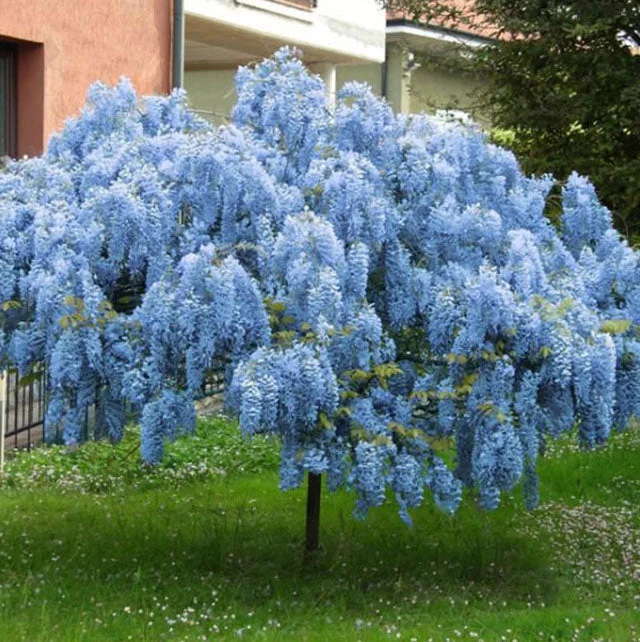
The label implies a separate plant, and that is where it goes wrong. A weeping Blue Chinese is one species, Wisteria sinensis, shaped into a standard with a trunk and an umbrella of hanging growth. The shape is real. The variety is not.
This article talks about what the weeping label does and does not mean, and answers the questions customers ask us most. Read on to learn what our rows showed, how the umbrella gets built, what to do about shoots below the graft, how flowering compares, and which seasons the tag skips.
What the Weeping Tag on a Blue Chinese Wisteria Tree Claims
A tag is a short sentence, and this one claims more than it says. Here is how we read it, and what proof we would want before agreeing.
The Claim as Shoppers Hear It
Most people hear "weeping" as part of a plant's identity. With many trees the hanging habit is built in, and the plant does it however you treat it. So a "weeping" tag next to a higher price suggests a separate type, selected to droop and worth more for it.
That is not what the word describes here. It names the shape of the head, not a plant. No cultivar name follows it, no breeder, and no note on how it differs from the plain vine.
What Would Count as Evidence
A true weeping selection would pass three tests. This one passes none of them.
- Untrained plants would hang on their own. Wisteria sinensis does the opposite and climbs, twining counterclockwise around whatever it finds.
- A cutting from a weeping plant would weep too, with no stake and no tying.
- The extension literature would describe a distinct form. Instead, Utah State Extension says wisteria can be grown in tree form with extensive training, though it is more commonly used on an arbor or trellis.
We call it what it is: the same species, trained. The training is real work, and we will get to what it is worth.
Row Notes on Trunks Grown Beside Seedlings
Put trained trunks and untrained plants of the same species in neighboring rows and the comparison needs no instruments, only a walk down the aisle.
What the Untrained Plants Do
Left to themselves, they send out long whips that grab the nearest stake, wire or neighbor. None forms a trunk. None arches over into an umbrella. They climb when something is there to climb and sprawl when nothing is.
What the Trained Trunks Do
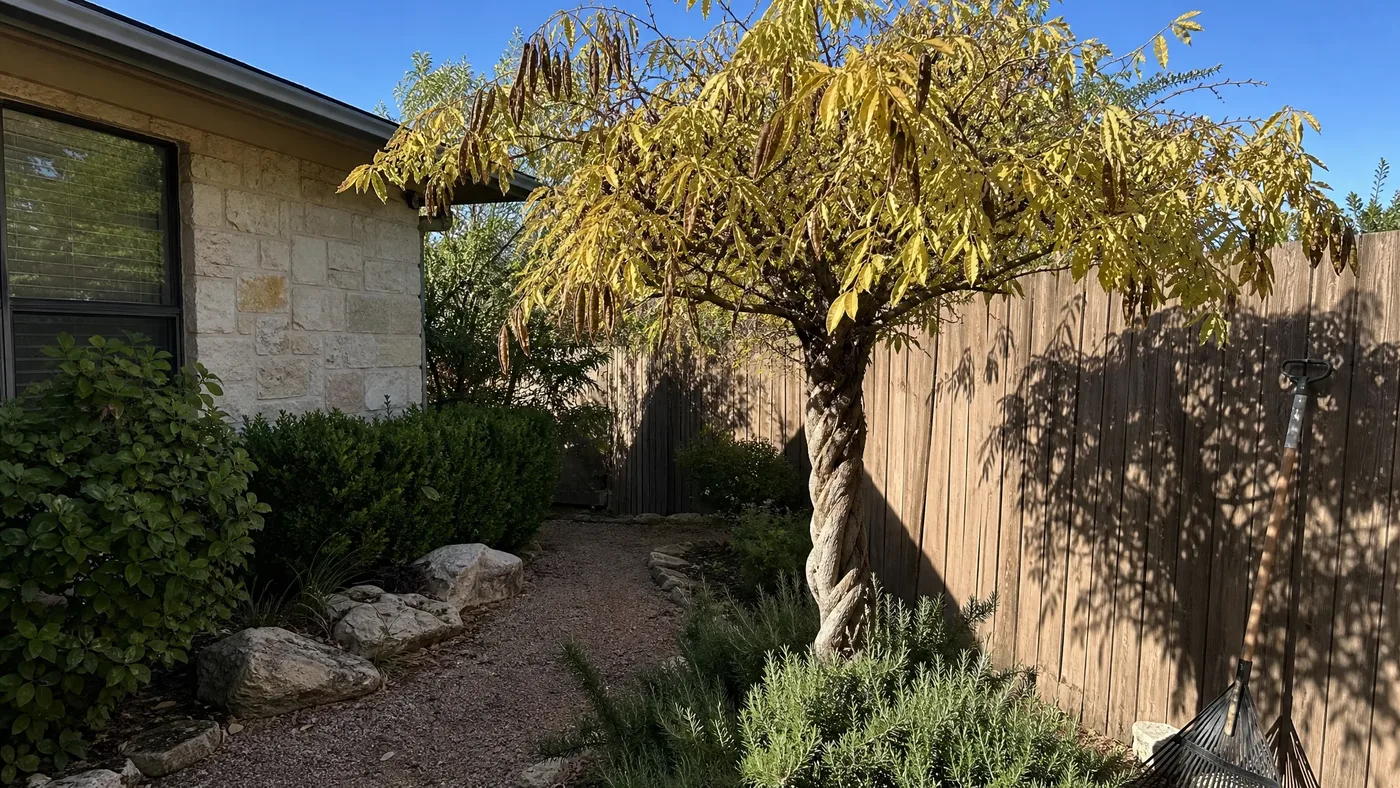
The trunk plants look different because someone made them different. A single stem is tied upright and thickens year by year, and the head is built at the top. Neglect one for a season and the vine returns. Twining shoots come from the head and the base, and the outline blurs.
What That Means for Buyers
One of the most common questions we get is whether the umbrella is something the plant is born with. It is not. The price pays for years of tying, pruning and staking. That is a fair thing to pay for, but it is labor, not genetics.
Do not compare bloom between a trained tree and a seedling, either. Seed-raised wisteria can take up to 20 years to flower, which is why nursery plants are grafted from known cultivars. Our buying guide covers what to look for in a trunk.
Blue Chinese Wisteria Tree Canopy Shape Over Three Winters
Winter is when a deciduous tree stops hiding things. Bare branches teach more about canopy shape than any summer walk.
What Winter Shows You
Without leaves, you can see the framework: how many branches carry the head, how they are spaced, and where each tie sits. In summer the pinnate leaves, with 7 to 13 leaflets each, hide all of it. In our rows, a head left alone for a winter came back as a thicket of long twining shoots, and the umbrella outline was gone.
The lesson is simple. The shape is not a trait the tree holds on its own. It holds only as long as someone keeps cutting it back to the framework.
Setting Expectations by Year
A young tree is a trunk with a short head, and it will not match the photos on the tag. The cascade arrives as the head fills in and the flowers start. Our guide on how many years until a Blue Chinese blooms covers that wait.
Much of the weeping look in May is also the flowers themselves. Pendulous racemes pull the shoots downward, and a bare head in January looks like a mop on a stick. That is normal. Judge a tree by a straight trunk, a firmly tied leader and well-spaced framework branches, not by the word "weeping."
Where the Umbrella Comes From, Cut by Cut
Every part of the umbrella traces back to a decision made with a tie or a pair of loppers. Here is the sequence.
Building the Trunk
Pick the single strongest upright shoot and treat it as the trunk. Tie it to a sturdy stake, loosely enough that it can thicken. Stems twine counterclockwise, so a loose spiral in that direction goes with the plant instead of fighting it. Remove side shoots on the trunk as they appear. Our staking guide covers the support itself.
Forming the Head
When the leader reaches the height where you want the umbrella to start, cut it. That cut forces branching just below it. Keep a few shoots spaced around the trunk, tie them out and slightly downward, and remove the rest.
Holding the Shape
Every year the head throws long shoots, and each one is a vote for going back to a vine. Cut them back to the framework and the umbrella stays an umbrella. Check ties each year too, because a trunk that is thickening will outgrow them. Timing and bud counts are in our pruning guide.
Sucker Shoots and Other Rootstock Surprises
Because nursery wisteria is grafted, a tree can carry two kinds of growth. Telling them apart is easy once you know where to look.
Finding the Union
You should be able to see the graft union as a bulge near the base of the stem. Everything above it is the named top. A shoot that appears below it comes from the rootstock. If you cannot find any bulge, ask where the tree came from before you assume anything.
Telling Them Apart
Position settles most cases, and the leaf can back it up. The species leaf is pinnately compound with 7 to 13 leaflets, each 2 to 4 inches long. Compare a doubtful shoot against leaves from the head. This table sums up what to look for.
| Sign | Growth from the head | Shoot below the union |
|---|---|---|
| Where it starts | Above the bulge | Below the bulge, or from the soil |
| Leaves | Match the rest of the canopy | May look different, so compare |
| What to do | Tie in or prune as part of the shape | Remove at its source |
What to Do About Them
We often see customers mistake the first one for a bonus branch. Cut it flush where it starts, not partway along, or it will return from the stub. Do it as soon as you spot it, since it competes with the head for energy. This species is fast growing and invasive, so there is no reason to let any extra stem stay.
Does a Blue Chinese Wisteria Tree Bloom Differently When Weeping?
Some sellers imply that the weeping form flowers more, or longer, or with longer clusters. We would want proof before paying for that.
Habit Versus Heredity
Raceme length belongs to the species. NC State describes 6- to 12-inch racemes of mildly fragrant blue-violet flowers that open almost at once. Its data field lists 4 to 8 inches, so the figure varies by tree and by year. Nothing in the sources ties raceme length to a weeping form. Illinois Extension gives bloom time as May, the same for any shape.
What a standard does change is the display. Flowers hang from the umbrella at head height, and you can stand beneath them. That matters more than it sounds, because the scent is mild and you catch it best up close. We would not call this heredity. It is posture.
What Does Shape Alter?
Flowering depends on the same things as any wisteria: age, sun and how you prune. Utah State Extension calls grafted plants from known cultivars the most reliable bloomers, and that holds whether the top is trained into an umbrella or onto a fence. If yours is slow, the reason is almost never the shape. Our guide on bloom time, color and duration sets out what to expect.
Seasons the Label Never Mentions for a Blue Chinese Wisteria Tree
A tag shows the tree at its best week. These are the surprises it skips in the other weeks, each with the adjustment that follows.
Bare Stick in Winter
After leaf drop the tree is a trunk on a stake with a knot of branches on top. Do not read that as failure. The species is hardy in zones 5a through 8b, so if you garden at the colder end of that range, check with your local extension service about protection.
Weight at Bloom
Racemes of 6 to 12 inches add real load to the head in a short span. Before flowering, check the stake and every tie. A loose tie on a heavy head can shift the whole umbrella sideways.
Wild Growth in Summer
This is the fast, twining part of the year. New shoots wrap around the stake and the trunk, and they will do it counterclockwise whether you want them to or not. Walk the tree every couple of weeks and unwind or remove what is climbing where it should not.
Same Plant, Different Habit
A weeping Blue Chinese Wisteria Tree is one species in two habits: the vine that twines, and the vine that someone has trained into a trunk and umbrella. The extra cost is for the training, not for a separate variety.
Blue Chinese Wisteria Tree
Nursery-grown Blue Chinese Wisteria Tree in sizes from Quart, shipped to your door.
From $49.49
Shop Now →So find the bulge, check the leaves, cut the shoots below it, and keep trimming the head back. Check your own tree's trunk and canopy this season and trust what you observe over the label. Before a plant leaves us, our growers check the trunk, the graft union and the roots, because we grow and sell top-quality trees from our own farms.